
Indonesia
13 Open Study/Research Award
Accepted Degree Levels
|
Grant PeriodFlexible StartGrant Length10-12 Months |
Award Type
Award Profile
Have you ever wondered how living and conducting research in an island nation more than 9,000 miles from the United States might change you?
Over 2,000 Americans have participated in Fulbright programs to Indonesia. With over 300 ethnic and cultural groups and more than 700 local languages, Indonesia offers a truly unique Fulbright experience. Many say the experience has transformed them—enhancing their intercultural communication skills, strengthening their leadership, and sharpening their adaptability. These qualities are essential in this increasingly connected world.
Fulbright Indonesia (AMINEF) offers the Fulbright US Student Research Grant, inviting you to conduct a 10–12 month independent research project in Indonesia. Your research may contribute to a doctoral or master’s degree program or be carried out as a non-degree project. Proposals from all fields of study are welcome.
Rich in natural resources and biodiversity, Indonesia continues to attract researchers in Environmental Science, Biology, Marine Science, and related fields. Past researchers have explored topics ranging from frog species and orangutans to rainforest health and shark ecology.
At the same time, Indonesia’s abundant cultural and linguistic diversity have always drawn researchers from the social sciences and humanities, especially Anthropology, Sociology, Cultural Studies, and Linguistics. With Indonesia projected to become one of the world’s five largest economies by 2030, research in Economics, Business, and related fields is also increasingly relevant. Not least, as the country with the world’s largest Muslim population practicing democracy, Indonesia offers timely topics for studies in Religion and Politics.
Beyond research, Fulbright Indonesia (AMINEF) provides opportunities for US Student Researchers to participate in enrichment activities that further enhance their overall grant experience and offers strong in-country support.
Our Fulbright US Student Research alumni consistently speak highly of their time in Indonesia. They share that immersing themselves in a culture so different from their own challenged assumptions, broadened perspectives, and enriched their worldview. For many, their Fulbright journey in Indonesia left a lasting impact that continues to shape their lives and careers long after their grant ended.
Grant Length
Grant Period
Grantees may begin their award as early as September 1, 2027, and no later than May 31, 2028. Grantees are expected to fulfill the full duration of the research period. A 12‑month grant may include up to three months of intensive Indonesian language study followed by nine months of research.
Orientation
Selected candidates will join a virtual Pre-Departure Orientation in Summer 2027. They will also join in-country arrival orientation in Jakarta when they start their grant.
Candidate Profile
Candidates must present a feasible research proposal. Candidates applying with only a bachelor’s degree should ensure that their proposals are well-designed and methodologically rigorous, with a clear plan for how they intend to use the results of their research in the future. In accordance with Indonesian government regulations, candidates must work with Indonesian collaborators and plan to jointly publish their research findings in accredited academic journals. Candidates should be independent, articulate, resourceful, and able to adapt.
What is life like for Fulbrighters in the host country?
Applicants are expected to research their host country. Application materials should indicate a clear commitment to the host country community and a description of how you will engage with it.
Every Fulbright US Student Researcher experiences a unique daily routine shaped by the nature of their project.
Some of our orangutan researchers describe waking up as early as 3 a.m. to follow the primates for up to eight hours deep in the rainforests of Borneo. While environmental scientists trek through dense jungle to collect samples, marine scientists dive beneath Indonesia’s vibrant seas in search of rare marine species.
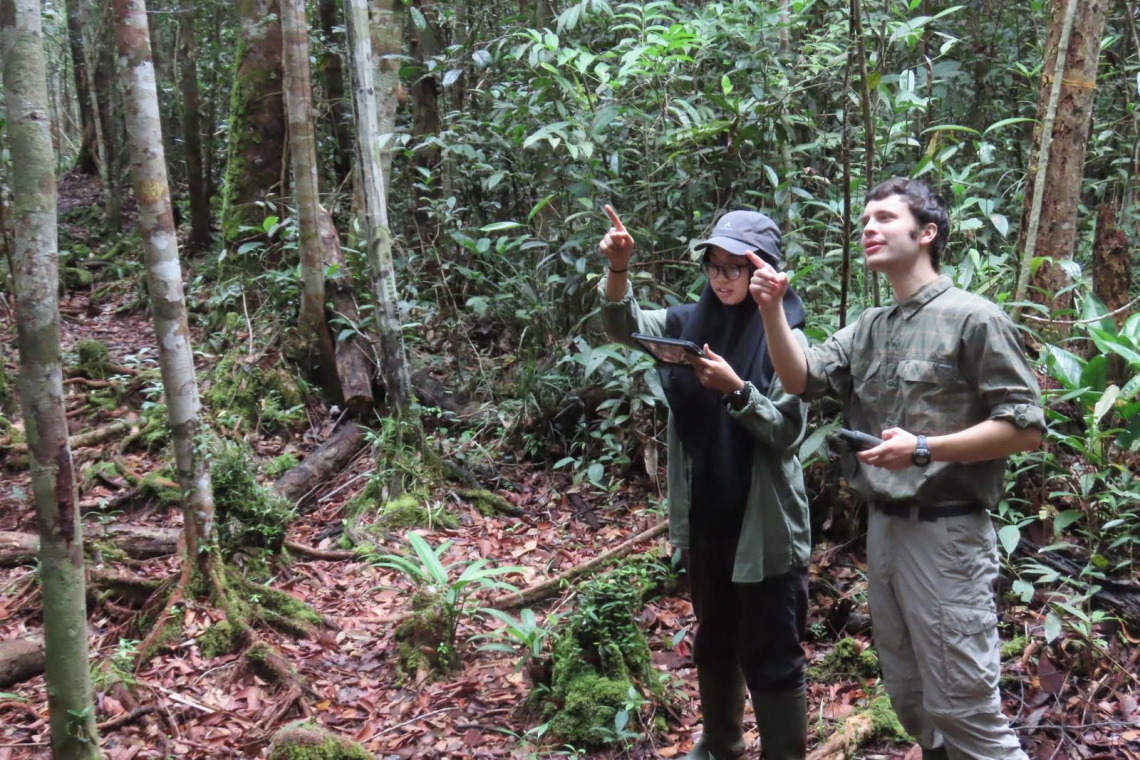 2024 Fulbright US Student Researcher Bryan Eichen (right) and his research assistant were following an orangutan at his research center in Central Kalimantan.
In other parts of the country, social scientists immerse themselves in local communities as they conduct ethnographic fieldwork. Historians often spend their days in archives, tracing stories preserved in manuscripts and records. Meanwhile, arts and music researchers learn directly from renowned Indonesian artists, gaining perspectives that enrich their Fulbright projects.
Beyond their academic work, Fulbrighters also have the opportunity to explore Indonesia’s breathtaking natural beauty and diverse cultures. Despite their varied backgrounds and research topics, they share a common thread: their Fulbright experience profoundly shapes both their personal and professional growth.

"Doing a Fulbright in Indonesia was a life-changing experience that opened my eyes to a whole new culture, lifestyle and way of seeing the world. I am incredibly grateful for the connections I forged through this time, both with my research counterparts and with local communities who welcomed me into their homes and lives to show me how they experience the world. My fulbright made it possible for me to do my doctoral dissertation research and I am so grateful for the support that AMINEF provided me. Following Fulbright I am excited to continue my work in Indonesia and expand the collaborations that I began during this year!" (Tamar Law, Fulbright US Student Researcher, 2024)
Eligibility
12 Months
Degree Level of Applicant
- Bachelor's
- Master's
- Doctoral
Special Application Instructions
Semi-Finalist candidates who are recommended for final review by the Fulbright Commission in Indonesia (AMINEF) may be contacted for online interviews.
Foreign Language Evaluation (FLE) Form
If required, submission of the Foreign Language Evaluation (FLE) form is mandatory, even if you have advanced skills or are a native speaker of the language. Failure to submit the required FLE form may impact your eligibility.
Please note that English is not widely spoken in Indonesia. As a result, relying solely on English may not be feasible for certain types of research—particularly ethnographic fieldwork or leading local research teams in remote areas. In such contexts, a strong command of Indonesian can be essential for effective communication and the overall success of the project.
While fluency in Indonesian is not required, candidates are expected to demonstrate a willingness to learn the language. Depending on available funding, Fulbright Indonesia (AMINEF) may provide support for Indonesian language study.
Fulbright Proposal Types
Yes
No
Affiliation
As per Indonesian government regulations, all foreign researchers must have local collaborators or institutional affiliations. While a formal letter of affiliation is not required at the application stage, Fulbright Indonesia encourages candidates to identify potential host institutions in advance. Possible affiliations may include:
- State or private universities
- State or private research centers
- Think tanks
- Museums, local foundations, or local NGOs
- Arts institutions
Candidates may contact Fulbright Indonesia for guidance on potential host affiliations. However, candidates are responsible for initiating communication and securing initial contact with prospective hosts. Once selected, Fulbright Indonesia reserves the right to revise or change a candidate’s proposed affiliation if it is deemed unsuitable or not aligned with the research project.
Selected candidates will be required to arrange an Memorandum of Understanding between their home institutions and Indonesian host institutions before obtaining a research visa from the Indonesian governmentr. AMINEF will provide general advice on this document.
Affiliation Fees/Tuition
Candidates should discuss any potential fees with their prospective host institutions in advance of the grant period. For example, if they plan to use the host’s laboratory, they should clarify any associated costs and the amount they may be required to pay. Candidates are also encouraged to seek additional funding to cover expenses that are not included in the Fulbright research grant.
Award Benefits
- A stipend broadly based on the cost of living in the host country. These funds may be used by the grantee to support housing, meals, and incidental costs during the grant period.
- International travel benefits
- Accident & sickness health benefits
- 24/7 mental health support line for urgent and non-urgent situations
- 12 months of non-competitive eligibility (NCE) hiring status within the federal government
Stipend Amount
This is an estimated amount and is subject to change. The financial terms of the grant will be confirmed in the grant document issued after selection.
Payment are transferred directly to grantee's US or Indonesian bank account. Stipend will be disbursed four times throughout the grant.
One-Time Allowances
This is an estimated amount and is subject to change. The financial terms of the grant will be confirmed in the grant document issued after selection.
- Excess baggage fees
- Language training allowance
- Registration/Permitting fees
- Research/Materials allowance
- Settling in allowance
Grantees will receive excess baggage allowance, visa and permit allowance, research allowance, and relocation allowance in the first grant disbursement. Depending on the budget, grantees may receive an allowance for language training.
Excess baggage fees: $1,000
Settling-in allowance: $750
Research allowance: $750
Customs allowance: $300
Additional Grant Benefits
- Mid-year seminar
Fulbright Indonesia offers various enrichment programs to support grantees' research and cultural exchange experiences. These programs are allocated on a first-come, first-served basis, subject to budget availability.
1. Domestic Travel Program
Fulbright Indonesia (AMINEF) may provide a travel grant for you to present your Fulbright projects or share their expertise with other academic institutions across Indonesia.
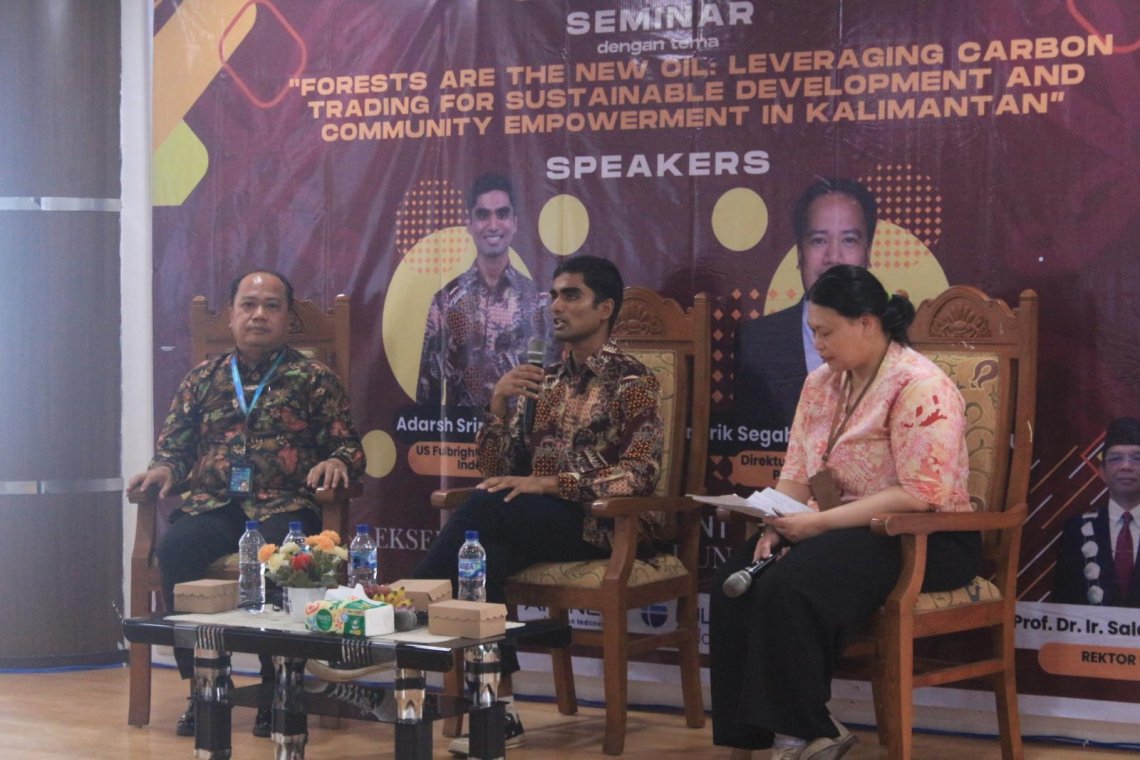 2024 Fulbright Student Researcher Adarsh Srinivasan (center) was invited by a university in Centeral Kalimantan to talk about his research project. The travel was funded by Fulbright Indonesia.
2. Host Engagement Project
Funding supports collaborative and educative side projects between researchers and their host institutions and/or local communities.
3. Counterpart Support
Funding enables primary Indonesian counterparts to join Fulbright researchers for a field visit of up to two weeks.
4. Additional Research Support
Funding is available for research activities, including hiring research assistants, translation services, informant fees, equipment purchases, and more.
5. AMINEF Networking Event
Fulbright US Student Researchers and US Scholars are invited to a networking event to share their Fulbright projects and cultural exchange experiences. All expenses are covered by AMINEF.
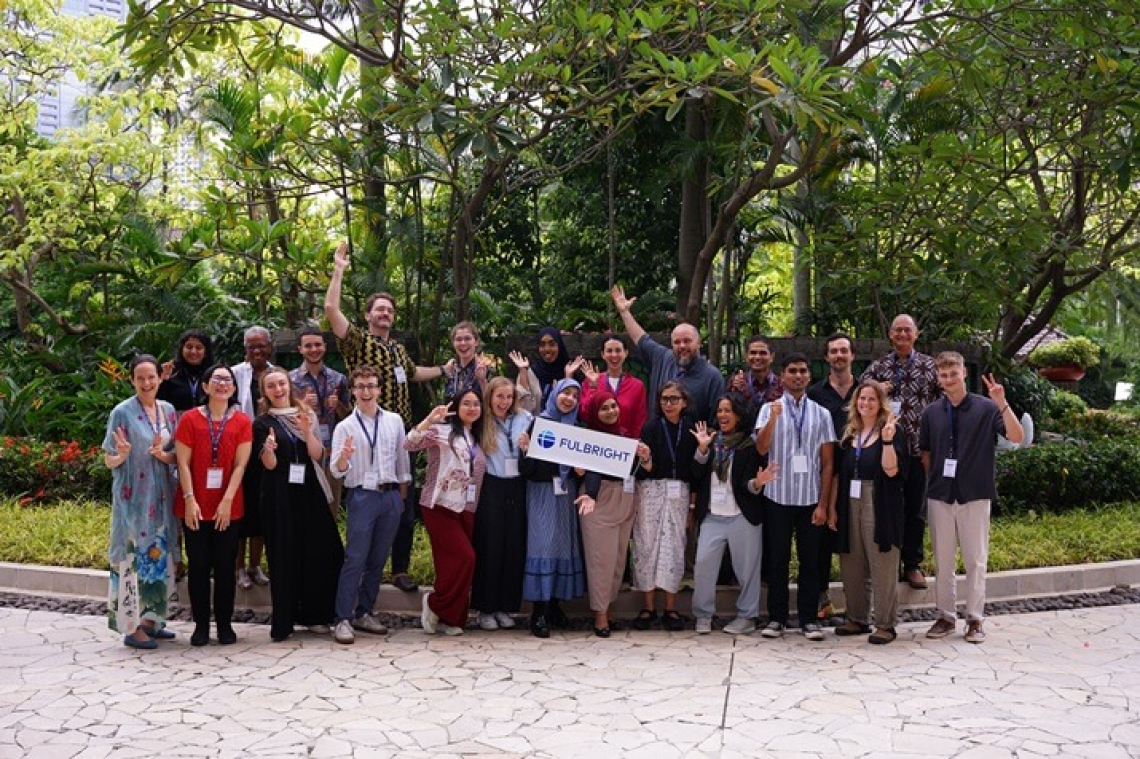 Fulbright Student Researchers meet with Fulbright ETAs and Scholars during a conference held in Jakarta in 2025. The event provided an opportunity to share their projects, exchange cultural experiences, and network.
Estimated Cost of Living
Consider using cost of living comparison websites to gain a better understanding of the potential costs in your host country.
The cost of living in Indonesia varies significantly across cities.
According to Statistics Indonesia (2023), Jakarta has the highest living expenses, averaging around Rp 15 million (approximately $1,000) per month. Other sources estimate that monthly costs in Jakarta typically range between $1,500 and $1,700.
In comparison, smaller cities such as Semarang and Yogyakarta offer a considerably lower cost of living. Meanwhile, popular tourist destinations—particularly Bali and various areas in Eastern Indonesia—tend to be more expensive due to higher demand and tourism-driven price increases.
Dependents
Housing Arrangements
Selected grantees must arrange housing at their sites on their own. They can seek advice and assistance from their Indonesian collaborators, counterparts, and contacts. Their host institutions normally have international office that assist foreign students and researchers identity housing options.
When requested, the Fulbright Indonesia (AMINEF) can also connect selected grantees with Fulbright alumni to give housing advice.
Research Permit and Visa Requirements
Research Permit and Research Visa
Foreign researchers to Indonesia must seek an Ethical Clearance and/or Research Permit from the National Agency of Research and Innovation (BRIN) and and Limited Stay Visa for Research Activities from the Ministry of Immigration.
AMINEF will assist grantees in navigating the process to secure the necessary permits and visas. Detailed procedures for obtaining a research permit will be communicated to grantees after selection.
Laboratory Research, Exporting Biological Samples, and Research in National Parks
Indonesian government regulations generally prohibit foreign researchers from transporting research samples outside the country. Whenever possible, all sample analysis must be conducted within Indonesia. Therefore, grantees should carefully confirm whether their host institution has the necessary laboratory facilities and functioning equipment to support their research needs.
Transporting samples abroad is not impossible if the required facilities are unavailable in Indonesia; however, it involves an extensive permitting process that may take several months—or even years—and may extend beyond the duration of the grant.
Additionally, grantees planning to conduct research in national parks or conservation areas must obtain an additional permit, called SIMAKSI, issued by the Indonesian Ministry of Environment and Forestry. Please note that applying for access to multiple national parks or conservation areas will further increase both processing time and costs.
Data Management/Storage
Upon finishing research, foreign researchers may also be asked to submit data collected from their field research in Indonesia to BRIN through an online research repository. Foreign researchers and their Indonesian collaborators are also expected to jointly publish the results of their research in an accredited international or national academic journal.
Fulbright Program Management Contact
Fulbright Commission/U.S. Embassy Website
Fulbright Commission/U.S. Embassy Contact
Additional Online Resources
Find potential host (Fulbright Indonesia alumni): https://stu.aminef.or.id/alumny/directory/indonesian